SDG 7: Affordable and Clean Energy
The university's electricity consumption through 2025
Completed
Jan 2025
- Dec 2025
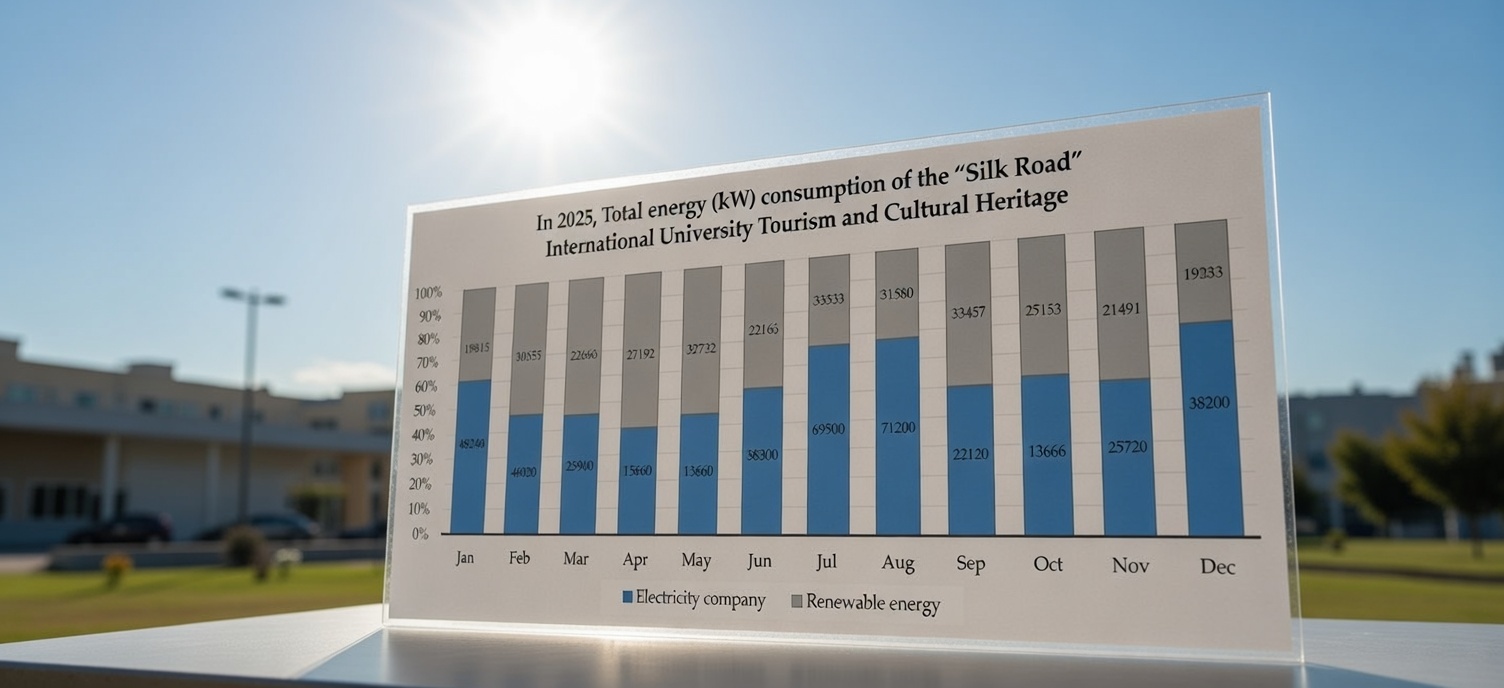
An energy production system based on solar panels with a total capacity of 320 kW has been established on the territory of the Silk Road International University of Tourism and Cultural Heritage. This measure is being implemented as a strategic direction aimed at expanding the use of renewable energy sources at the university and ensuring the reliability of energy supply within the framework of SDG 7 (goals). As a result of comprehensive analyses conducted to determine the university's electricity consumption indicators for 2025, a total of 774,728 kW/h of electricity was consumed. Of this total consumption, 451,140 kW/h corresponds to energy supplied by the Electric Company, while 323,590 kW/h of energy was generated through an energy production system based on solar panels installed on the territory of the university and directed to cover internal consumption needs. This means that the share of renewable sources in the university's energy supply has increased to 41.8%. is considered an important indicator of energy sustainability and expansion of clean energy sources set out in SDG 7. As part of strategic measures aimed at increasing the efficiency of the use of renewable energy sources, a total of 121,905 kWh of electricity was sold to the Electric Company during 2025. This practical result demonstrates the university's systematic approach to not only meeting internal energy needs, but also increasing energy efficiency by returning excess energy to the grid. At the same time, this activity contributes to reducing carbon emissions in accordance with the goals of SDG 13, and the use of renewable energy sources reduces fossil fuel-based energy consumption and reduces CO₂ emissions.
In addition, in order to increase energy efficiency and optimize internal energy consumption, solar water heating systems (solar devices) have been introduced at the university, a total of 8 devices - 200 liters each, with a total capacity of 1,600 liters - have been installed. As a result of the provision of hot water through these systems, the use of electricity will decrease and the share of renewable energy in the overall energy balance will increase. These measures are also implemented in accordance with SDG 7, SDG 9 and SDG 13, strengthening the university's strategic approach to sustainable development.